
Introduction to Flexible Electronics by Loomia
Flexible electronics are electronic devices made of bendable and stretchable substrates and components. Flexible electronics can be made from polyimide, conductive inks, or printed circuits. The type of material used is dependent on the application. Read on to find out more about flexible electronics technology, how these electronics are made, and where they can be used.
History of Flexible Electronics
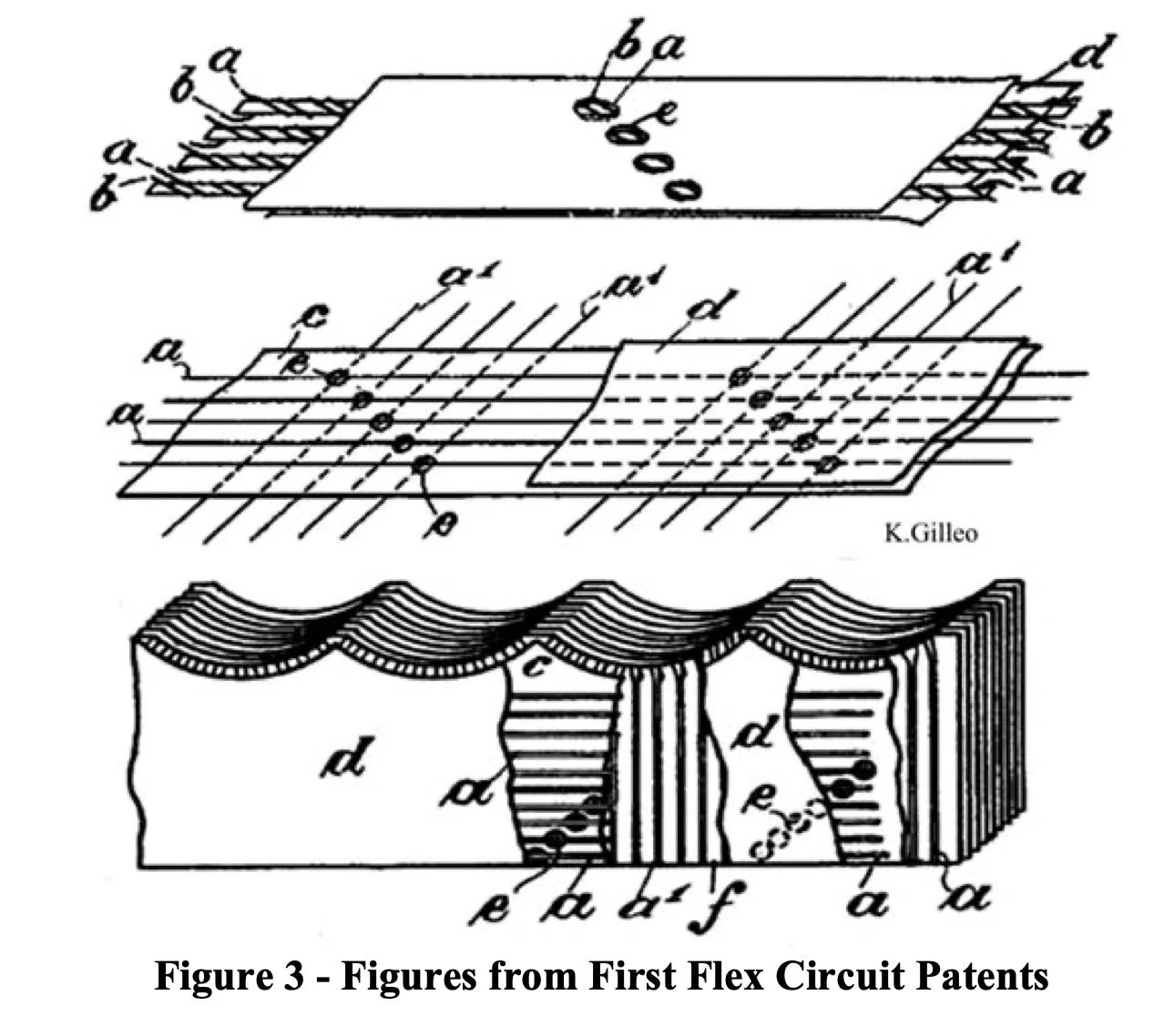
Image: ET-Trends LLC, Ken Gilleo, PHD
The history of flexible electronics can be traced back to 1903. A man by the name of Dr. Ken Gileo developed and patented an electronic device that consisted of metal conductors on coated paper. Since then, flexible electronics technology has evolved to become more complex and sophisticated. There are several different techniques now in flexible electronics manufacturing.
Types of Flexible Electronics
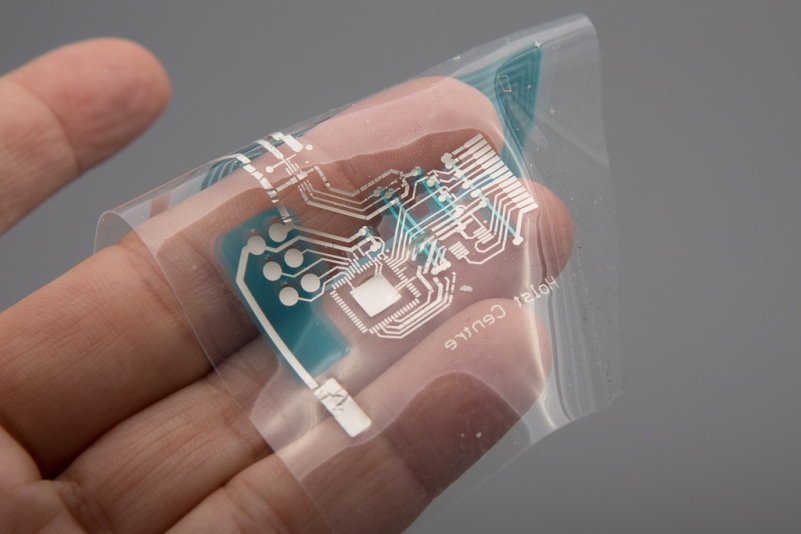
Image: Holst Centre
Flexible electronics come in many different forms. They can be single-sided, double-sided, multi-layer, or rigid-flex. Here is what each of those terms means:
1. Single-Sided
Single-sided flexible electronics consist of a single layer of metal or conductive polymer on flexible film. This variety is typically used in LED glass and automotive lighting.
2. Double-Sided
Double-sided flex electronics have two layers, and components are placed on both sides of the substrate. The bonus to this type is that crossover connections, such as a mouse to a computer, are easy to complete.
3. Multi-Layer
These flex electronics have three or more layers of components and are a combination of single-sided and double-sided flexible electronics.
4. Rigid-Flex
Also called hybrid flexible electronics, rigid-flex electronics consist of rigid (non-flexible) and flexible substrates. And, they are laminated together into a single unit. Rigid-flex electronics are commonly used in military and consumer products. In fact, the laptop you use every day most likely contains rigid-flex boards.
Key Definitions
Flexible Hybrid Electronics: Printed electronics that are made of silicon or conductive ink-based circuits on a flexible substrate.
Printed Electronics: Electronics that utilize printed traces, primarily made of conductive ink. Printed electronics may be flexible or not, depending on the surface material.
Plastic Electronics: Electronic devices that are built on polymer substrates, instead of silicon, glass, or heavy metal. These are not flexible in nature.
Applications of Flexible Electronics
We mentioned a few different applications for flexible electronics, but we would like to divide them up based on the type. That way, you can get a better understanding of how each works.
Single-Sided
Single-sided flexible electronics are best suited for applications with an unusual form factor, and thus require more folding or bending. Consumer electronics, automotive sensors, and medical devices typically use single-sided flexible electronics because they are lightweight and do not contain a lot of bulky components. If we were to get more specific, here are some common products that utilize single-sided circuit boards:
Laptops
Printer heads
Robotic arms
Cameras
Hearing aids
Heart monitors
GPS systems
Double-Sided
Double-sided flexible electronics are ideal for products that require a more complex circuit design, improved signal, and a reduced risk of wiring error—all in a compact and lightweight unit. A double-sided flex PCB, for example, is usually used in LCD screens for cellphones, optics in computers, and dense surface mounting. They can also be used for the following:
Industrial control panels
Power supplies
Instrumentation
HVAC systems
Automotive dashboards
Vending machines
Multi-Layer
Multi-layer flexible electronics are a bit more complex than the others. After all, they are a combination of two types of flexible electronics—single and double-sided. Because they are more “elaborate” in design, they are best suited for applications with design challenges—many of which require a high circuit density that is not possible with a single or double layer. Multi-layer flexible electronics are typically used in sophisticated and high-performance applications in military and aerospace. However, they have been used in smaller-scale products such as:
Remotes
Smartwatches
Microwaves
X-ray machines
At-home satellites
Automotive headlight switches
Alarm systems
Rigid-Flex
As you know, rigid-flex electronics are made of a combination of rigid and flexible electronics, which makes them best for applications that do not require a lot of flexibility and stretch. Rigid-flex PCBS, specifically, can be found in:
Tablets
Laptops
MRI systems
Wireless communication systems
Entertainment systems
Pacemakers
Flexible Electronics Pros and Cons
Like any technology solution, there are reasons to and reasons not to use flexible electronics in a design. And these pros and cons vary depending on the solution you use. Here are some things to keep in mind.
The Pros
Depending on the type, they have a high bend-radius limitation
Can adapt to odd geometries
Take up less space
Add little to no weight
Can withstand significant mechanical stress
Possess high mechanical resistance
Limited maintenance and reliable
The Cons
High initial cost
Difficult to repair or modify
Can be damaged if mishandled
Loomia’s Flexible Electronics Technology Explained

Loomia’s Flexible Electronics - The LEL Technology
LOOMIA’s patented Loomia Electronic Layer (LEL) reimagines what flexible electronics can be. While it differs structurally from traditional flexible PCBs, the LEL delivers many of the same electrical performance characteristics while offering significantly greater flexibility, drapeability, and integration potential. Designed with a soft, mesh-based architecture, the LEL can bend, stretch, and conform to complex surfaces in ways conventional circuit boards cannot. Unlike many flexible electronics that still rely on rigid housings or bulky wire assemblies, the LEL integrates directly into textiles, soft goods, and curved products with minimal added bulk. This enables seamless integration of heating, sensing, lighting, and signal routing into next-generation wearable, automotive, robotics, and consumer applications.
Check out our store to purchase parts for your next project!