
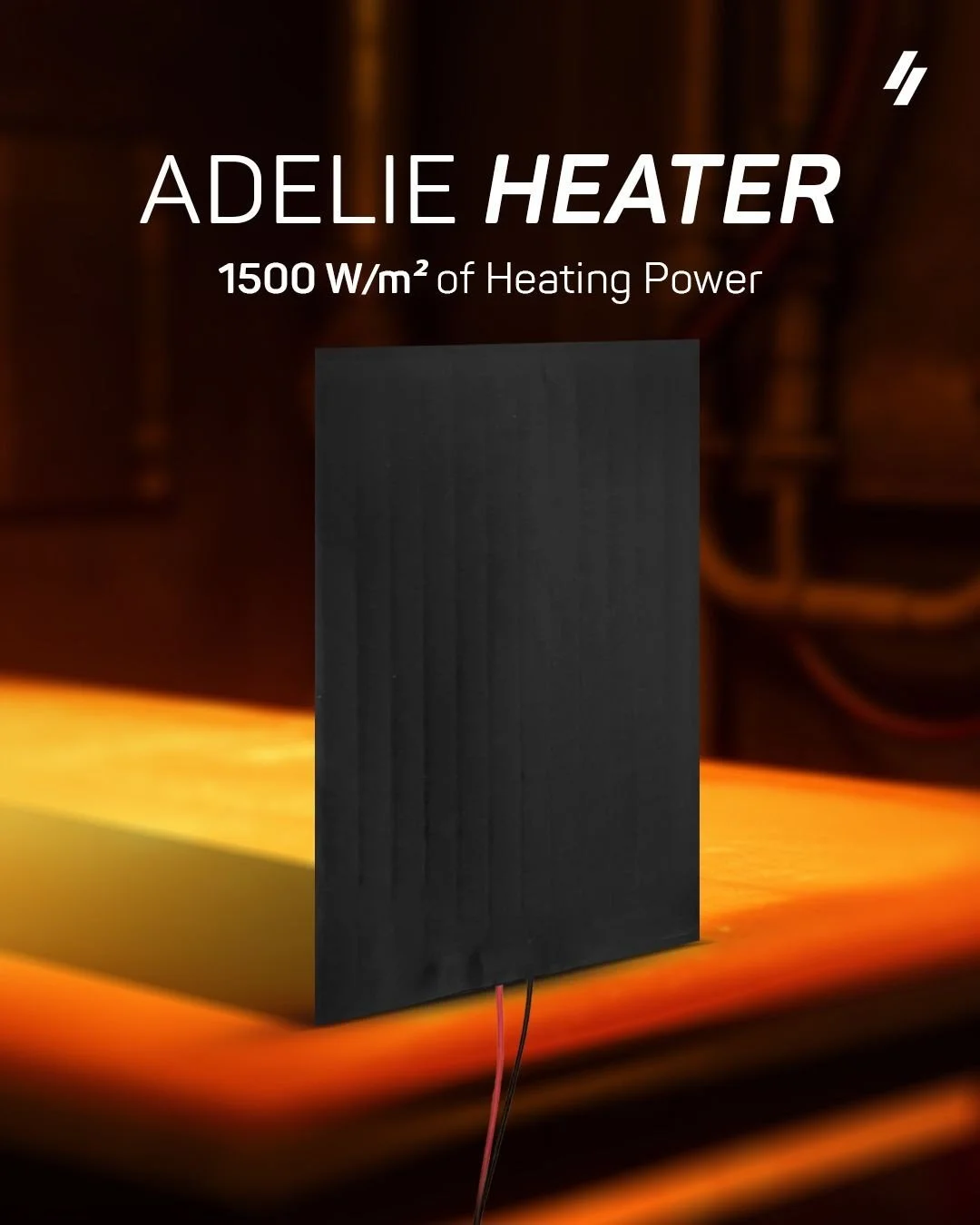
 Image 1 of 2
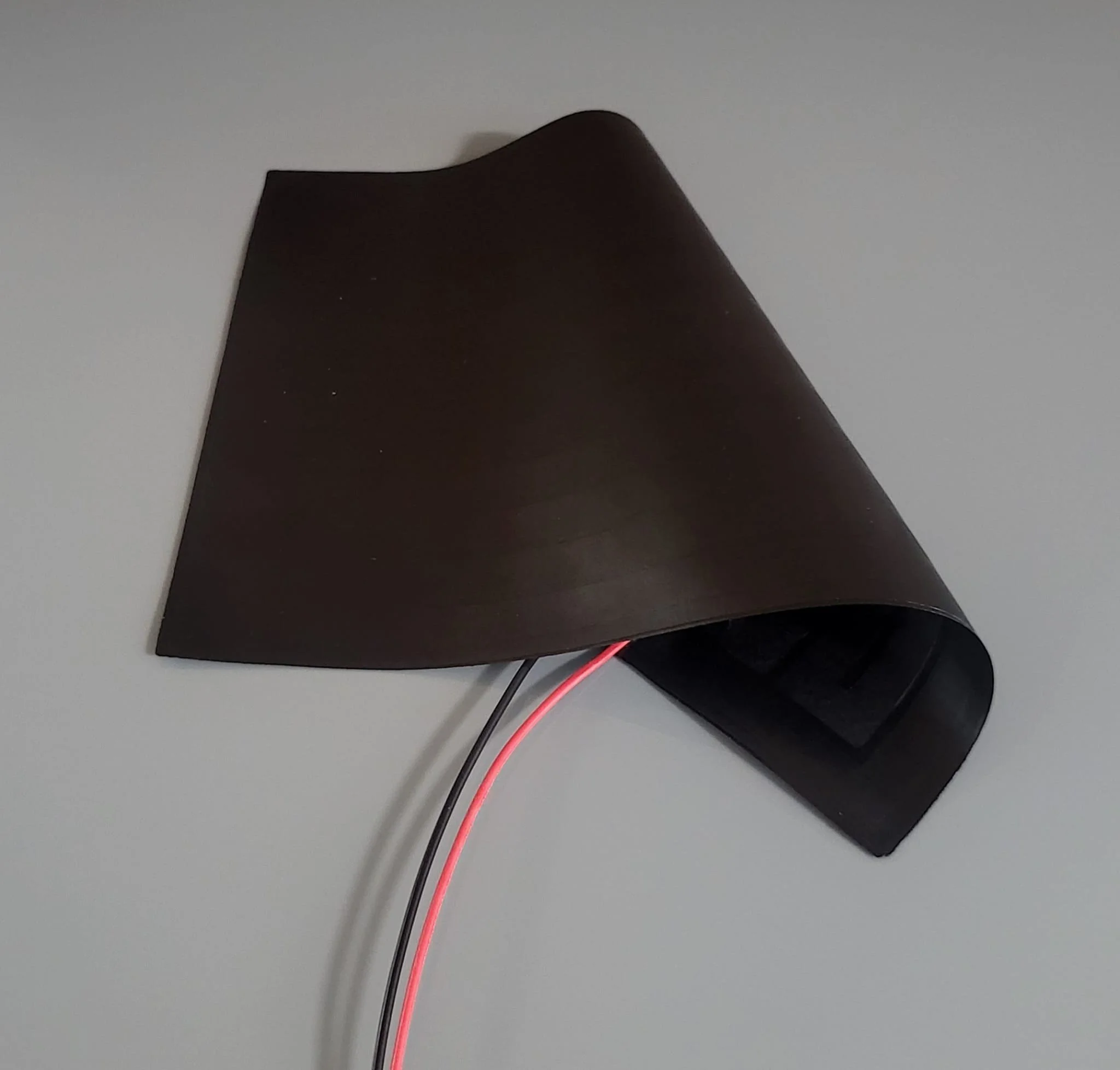 Image 2 of 2
Full Specifications:
All parameters for the Adelie flex heater in its standard off-the-shelf configuration. Custom voltages, dimensions, and connectors are available.
| Operating Voltage | 12 V |
| Resistance | 3.8 Ohms |
| Steady State Current | 2.53 Amps |
| Max Current | 3.15 Amps |
| Power Density | 1643.48 W/m² |
| Temperature at 12V | 102 °C (215 °F) |
| Overall Dimensions (L × W × H) | 19.58 × 13 cm 7.71 × 5.12 in |
| Heating Dimensions | 18.77 × 12.14 cm 7.39 × 4.78 in |
| Operating Temperature | 18.3 °C to 102 °C 65 °F to 215 °F |
| Wire Length | 30.48 cm (12 in) 20 Gauge Wire |
| Insulation Material | Thermoplastic Polyurethane |
| Conductor | Proprietary (multi-metal) |
| Interconnection Pull Out Force | 40 N |
| Connector Options | Component can be outfitted with barrel jack and other terminations |
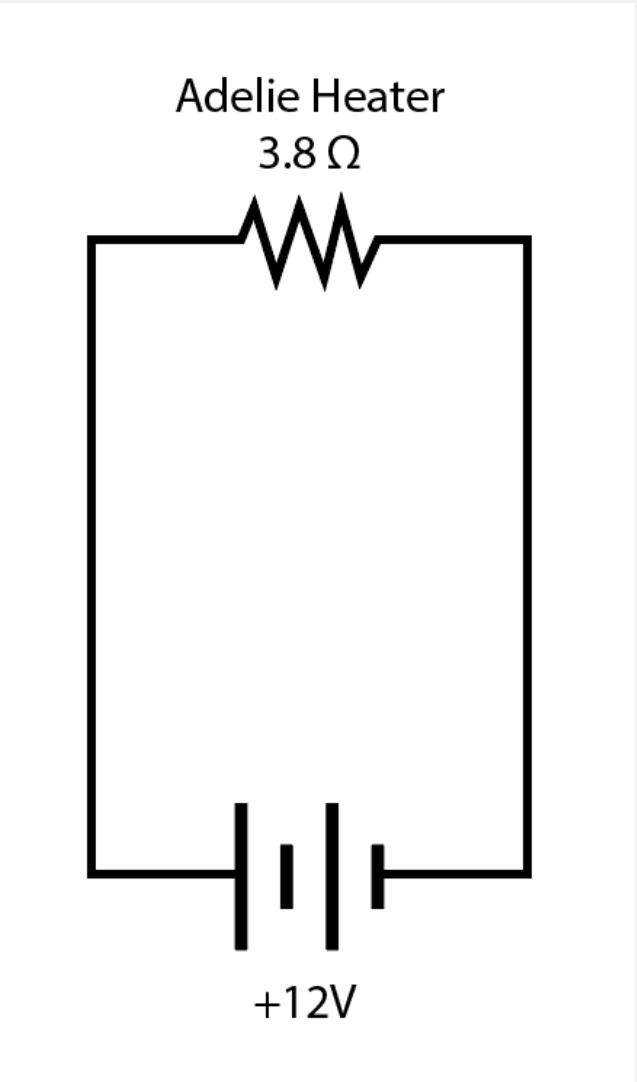
Adelie Heater — 3.8 Ω · +12V
Testing with The Adelie Flex Heater
Below are three sets of testing data, performed in three environments. The following data can be used to better understand the performance of our Adelie Heater.
Test 1: Desktop Thermal Test with Flir Camera at uncontrolled room temperature
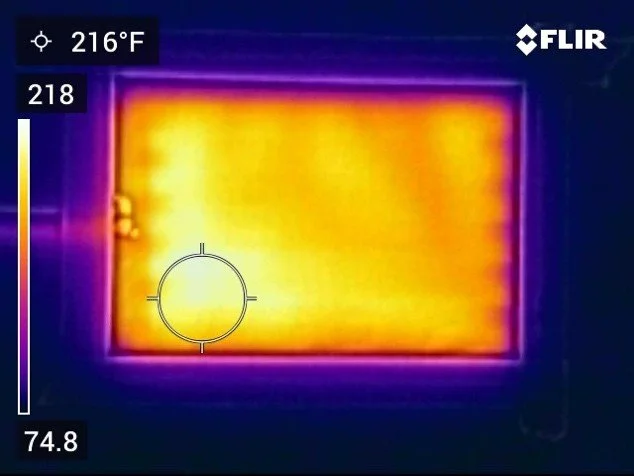
| Heating Time | Overall Heat | Hottest Spots |
|---|---|---|
| 1 min | 85 °C (185 °F) | 86.11 °C (187 °F) |
| 5 min | 93.33 °C (200 °F) | 101.67 °C (215 °F) |
| 10 min | 101.67 °C (215 °F) | 104.44 °C (Max 220 °F) |
Key Benefits of the Adelie Flex Heater
4) Fully Customizable
Need a different shape, voltage, or connector? Loomia's patented LEL technology supports custom flex heater configurations from 3.7V to 28V across a range of form factors.
5) IATF 16949 Production
Producible in an IATF 16949-certified facility, the Adelie flex heater meets the quality management requirements expected by Tier 1 and OEM automotive supply chains.
6) TPU Encapsulation
Thermoplastic Polyurethane insulation provides excellent durability, moisture resistance, and flexibility — outperforming traditional silicone or PET-based flex heater constructions.
1) High Power Density for Fast Heating
At 1,643 W/m², the Adelie flex heater reaches operating temperature within minutes. This is critical for cold-climate automotive comfort and rapid cabin warm-up scenarios.
2) True 2-Way Stretch
5% elongation with less than 1% change in resistance after 500 stretch cycles. The flex heater maintains electrical performance under repeated mechanical deformation.
3) Automotive Surface Ready
Pre-validated for seats, door panels, center consoles, and steering wheels. Peel-and-stick adhesive compatibility means fast, repeatable integration in production lines.
Applications for the Adelie Flex Heater
Modern automotive interiors demand heating solutions that go beyond traditional wire-wound or carbon fiber technologies. A high-quality flex heater solves the core challenge of bringing controlled, even warmth to contoured surfaces without compromising tactile quality, durability, or assembly speed.
Common applications include:
Heated car seats
Interior door panels
Center consoles
Steering wheels
Trim surfaces
Its flexible design allows engineers to incorporate heat into surfaces where rigid heating elements cannot be used.
Learn more about how Loomia technology is used in the automotive industry.
Potential Applications


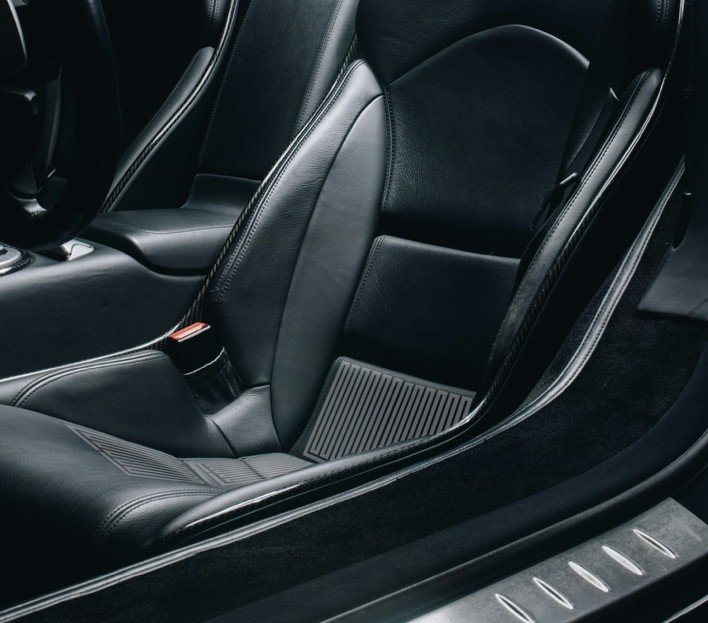
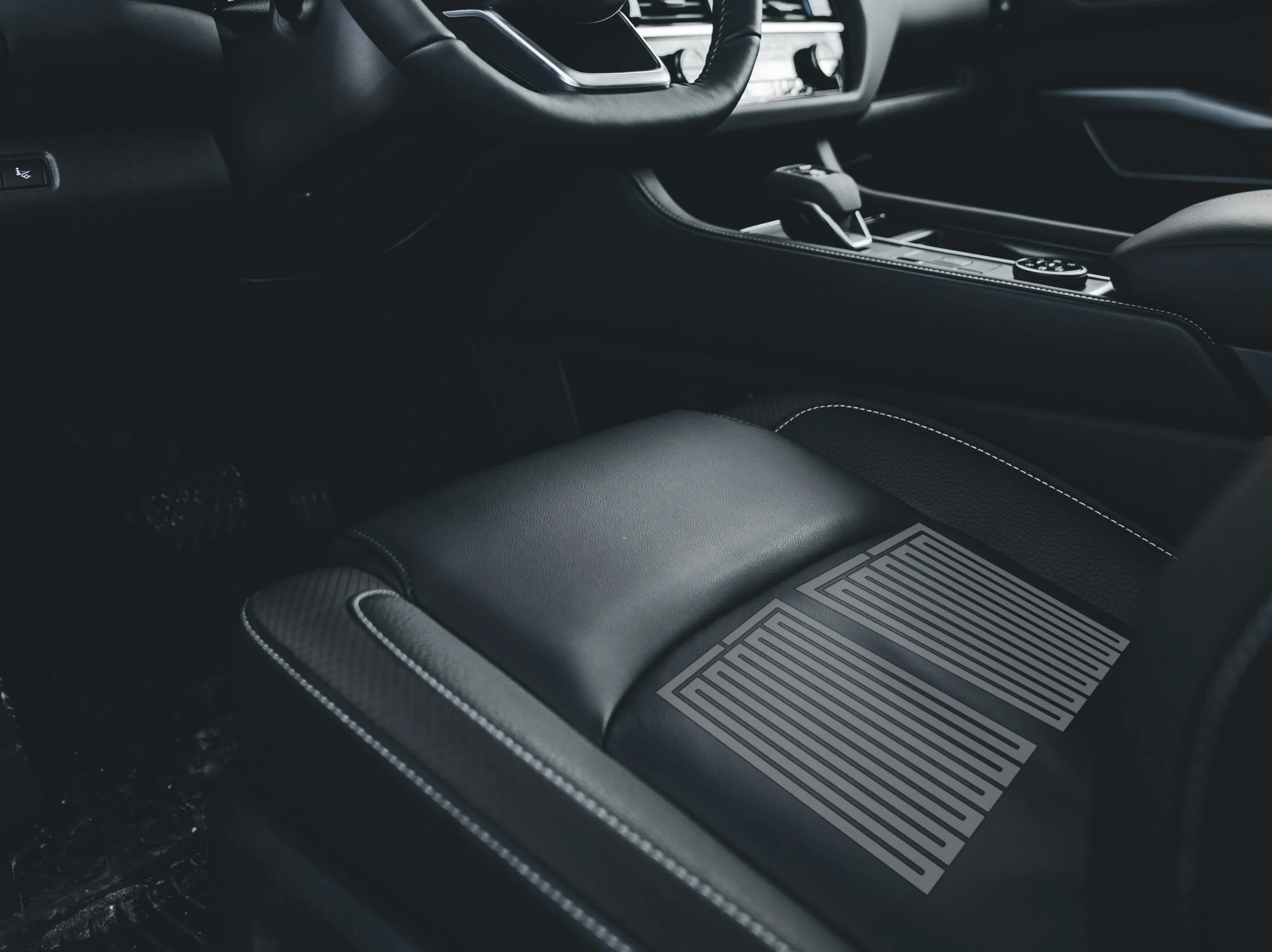
Integration Instructions
In production the LEL does not come attached to a base fabric. You can attach the LEL to your fabric of choice as shown in the stack-up diagram below:
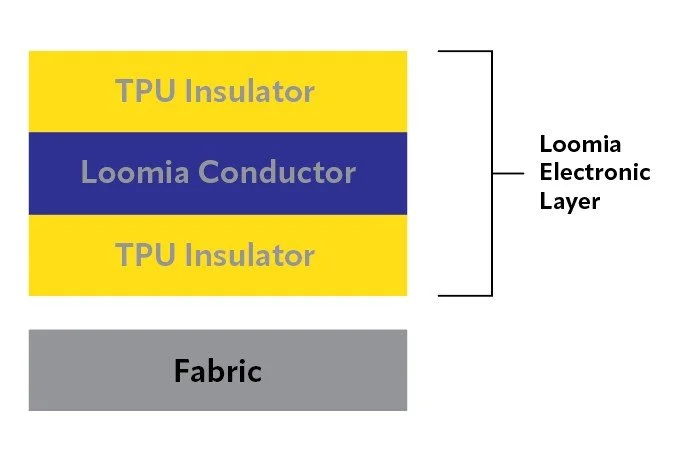
LEL heaters are ideal for flat materials. We do not recommend laminating the LEL to high pile materials like Polartec Fleece or chunky knits.
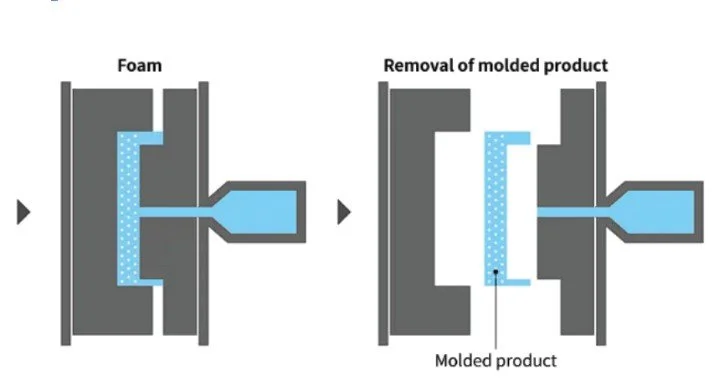
For center consoles and surfaces, this component can be back-foamed for easy integration into soft-touch components.

For seats and steering wheels, this component comes with a peel-and-stick backing for easy integration.

FAQ - The Adelie Flex Heater
-
A flexible heater, or flex heater, is a device that can generate heat electrically or chemically with flexible mechanical properties. They are bendable and can adhere to a variety of surfaces, whether curved or linear.
They can be made using Flex PCBs, printed electronics, wires, and more. Loomia’s heating technology uses a unique mesh conductor, which creates an efficient and conformable component. Each of these methods meets a specific set of standards for heating and overall performance, as well as size, shape, and weight requirements.
-
The Adelie flex heater generates heat through a conductive mesh embedded within Loomia’s Electronic Layer (LEL) structure. When electrical current passes through the conductor, resistance converts the electrical energy into heat.
Operating at 12V with a resistance of 3.8 Ω, the heater delivers 1643 W/m² of power density, enabling rapid and uniform heating across its surface.
-
Flex heaters are commonly used in automotive interiors where traditional rigid heating elements cannot conform to the surface.
Typical applications include:
1- Heated car seats
2- Interior door panels
3- Center consoles
4- Steering wheels
5- Trim surfacesBecause a flex heater can bend and stretch, it allows engineers to add heat to contoured surfaces without affecting comfort or design.
-
The Adelie flex heater reaches operating temperature within minutes. Testing shows the heater reaching over 85°C after just one minute and approaching steady-state temperatures near 100°C within several minutes when powered at 12V.
This fast heat-up time makes it suitable for automotive environments where quick cabin warming is important. -
Yes. Loomia flex heaters can be customized for different product designs and performance requirements.
Customization options include:
Custom shapes and sizes
Voltage ranges from 3.7V to 28V
Different connector types
Modified heating patterns
This flexibility allows the heater to integrate into a wide range of products beyond standard automotive configurations
-
The Adelie flex heater can be integrated using several common manufacturing techniques.
Typical methods include:
Peel-and-stick integration to foam or trim surfaces
Back-foaming during molding processes
Fabric lamination using Loomia’s Electronic Layer structure
These integration options make it easy to incorporate heating functionality directly into soft materials used in automotive interiors